
Caboolture Country Markets
A pre-dawn Sunday institution since 1979, now the largest market in South East Queensland with its own live poultry nursery.
Also known as Caboolture Markets.

About this market
Caboolture Country Markets began in 1979, founded by a couple, Jack and Jean Lindsay, working with a group of volunteers to build the ideal Sunday morning outing. Nearly five decades later it's grown into the largest market in South East Queensland, still running every Sunday at the Caboolture Showgrounds.
An early start, and a genuine farm feel
The market opens at 5am and wraps up by 11:30am, an early enough window that it's built around beating the Queensland heat rather than a leisurely late-morning wander. More than 500 stalls fill the showgrounds, including over 40 dedicated fruit and vegetable stalls, drawing crowds reported as high as 10,000 people on a busy Sunday.
Market at a glance
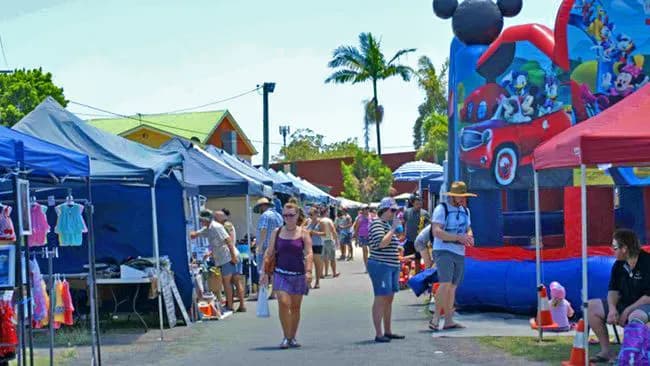
Images: Caboolture Country Markets. Run this market and want one changed or removed? Tell us.
One detail that genuinely sets it apart from most country markets: a small animal nursery on-site sells live poultry, chickens, hens, roosters and ducks, alongside the usual bric-a-brac, plants, seedlings and fruit trees. It's the kind of stall you don't see at many markets closer to a capital city.
Caboolture Country Markets keeps a live poultry nursery on-site, selling chickens, hens, roosters and ducks, a genuinely unusual offering that's survived from the market's rural origins in 1979.
Good to know before you go
Arrive close to the 5am start if fresh produce or the poultry stalls are the goal, since the busiest sections thin out well before the 11:30am close. It's closed on Caboolture Show day, Christmas Day and Anzac Day if either falls on a Sunday.
Frequently Asked Questions
- What time does Caboolture Country Markets open?
- Sunday, 5am to 11:30am. It's genuinely an early-morning market, closed by lunchtime.
- Is there an entry fee?
- No, it's free to attend.
- What makes it different from other country markets?
- The scale, with more than 500 stalls and up to 10,000 visitors on a busy Sunday, plus a small animal nursery selling live poultry, chickens, hens, roosters and ducks, alongside more than 40 fruit and vegetable stalls.
- What days is Caboolture Country Markets open?
- Sunday, 5am to 11:30am.