Eating With the Seasons: Australian Produce at the Market
· LocalMarketSpot
Australia grows across five climate zones at once, so there is no single national season for anything. Here is how the harvest calendar actually works, and what it means for what is on the stall.
Here is a thing that trips up anyone who moves states. You learn that mangoes mean summer, then you spend a winter in Darwin and the market is full of them in September. You learn that strawberries are a summer fruit, then you find them stacked high at a Brisbane market in July. Neither is a mistake. Australia just does not have one season for anything.
The country grows across five climate zones at once, and the same fruit can be months apart from one zone to the next. A national "what's in season" chart is an average of all five, which makes it wrong almost everywhere. This guide is about how to think about it instead.
The five zones
Climate explains the pattern better than state borders do, even though the seasons are easiest to look up by state.
The tropical north. Darwin, Katherine, far north Queensland. Wet summer, dry winter. Mangoes from September, melons and citrus through the dry, avocados mid-year.
The subtropics. South east Queensland, northern New South Wales. This is the zone that runs backwards from what southerners expect: winter strawberries, winter tomatoes, blueberries from late winter.
The temperate south east. Sydney, Melbourne, inland New South Wales and Victoria, the Adelaide hills. The classic four-season calendar. Stone fruit and berries in summer, apples and pears in autumn, citrus in winter, asparagus in spring.
The mediterranean south west. Perth and the Adelaide plains. Hot dry summers push the stone fruit and grape season slightly later, and citrus runs long, into November.
The cool south. Tasmania and alpine Victoria. Everything arrives a few weeks after the mainland and leaves later. Tasmanian cherries are still around when the mainland season is done.
Your state page on the produce in season pages lists what growers in your state are actually picking, month by month.
North and south run opposite seasons
The single most useful fact in this whole guide: for several crops, the northern and southern harvests are in different halves of the year, and they hand off to each other.
Mangoes start in Darwin in September, move to Queensland in November, and Carnarvon in Western Australia carries them into February. Watermelon is a dry-season crop up north, so Kununurra and Bowen pick through the middle of the year while the southern states are frosted over. Strawberries split cleanly: Queensland grows them June to October, the temperate south grows them October to March. They are two seasons, not one long one.
This is why supermarket produce feels seasonless and market produce does not. A supermarket buys from whichever zone is currently picking. A producer-only market like Carriageworks Farmers Market or Adelaide Showground Farmers' Market can only sell what is growing within a truck drive, so the stall in January and the stall in July look nothing alike.
Buy it, or plan around it?
Some produce is worth building a trip around. Cherries have a six to eight week window in any one district and they do not keep, so they are the classic thing to catch rather than schedule. Figs bruise if you look at them and are reliably better at a market than anywhere else. Asparagus gets four good weeks in spring and then it is done.
Other produce you just buy when you see it. Apples and pumpkin both cure and store for months, so the season is soft at the edges. You will still do better at a market in autumn, buying apples picked weeks rather than months ago, but you are not missing a narrow window if you go in June instead.
A market year, roughly
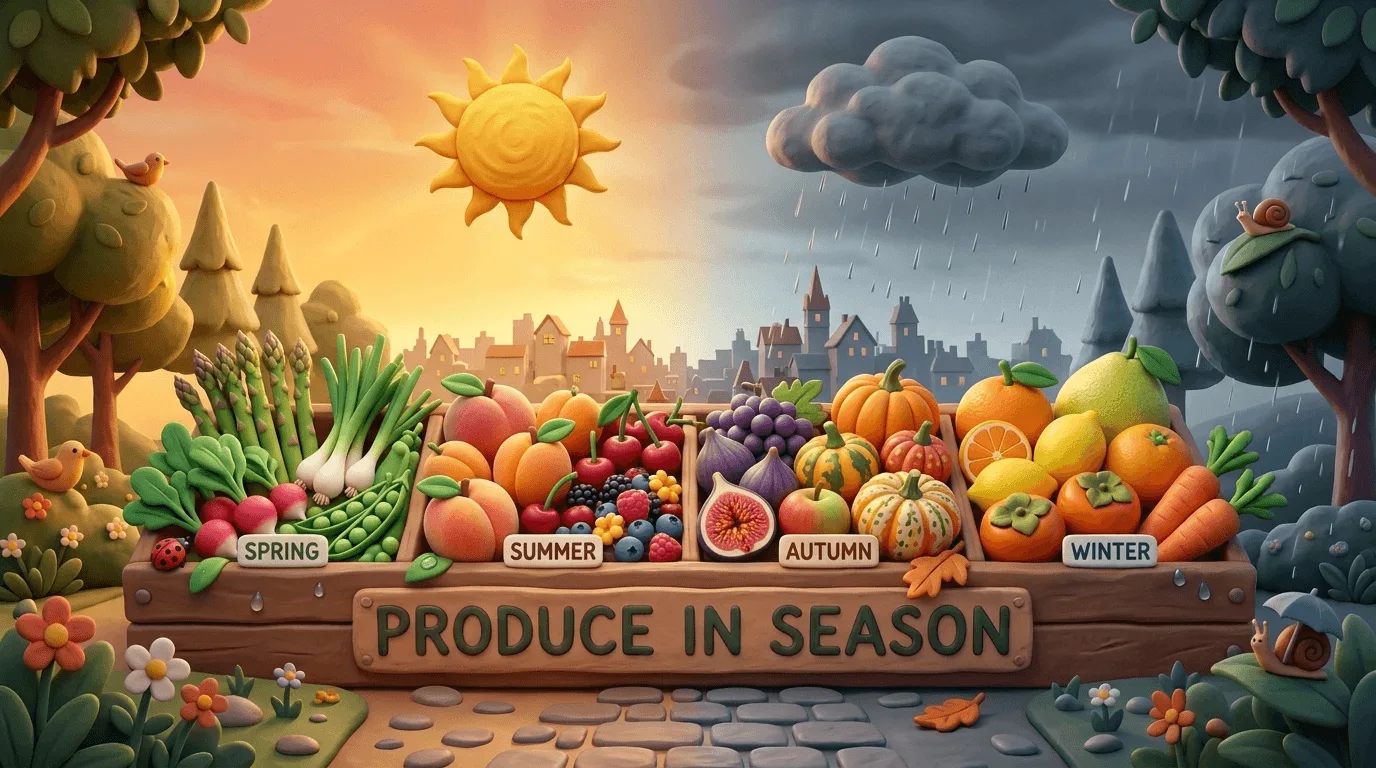
Summer, December to February. The big one. Stone fruit moving from apricots through to late plums, cherries early, berries, table grapes from February, tomatoes and watermelon in the south, mangoes handing down from Queensland.
Autumn, March to May. Apples and pears at their best in the temperate and cool zones, figs, grapes, the first pumpkin, late stone fruit tailing off. A good, underrated season at a market.
Winter, June to August. Citrus is the reason to turn up. Oranges, mandarins, grapefruit, all at peak when the rest of the stall is root vegetables and brassicas. Queensland strawberries and tomatoes come down from the north. Cold-stored apples and pears fill the gap.
Spring, September to November. Asparagus first, then the earliest strawberries in the south, broad beans and peas, rhubarb, and the northern mango season starting up. The stall changes fastest in these three months.
The produce in season tool computes the current version of all this for your state, and every item links to the farmers markets and produce and fresh food markets nearby that sell it.
One more thing
Ask the grower. The person behind the table knows exactly how many weeks are left in the cherries, which apple keeps best, and whether next week's tomatoes will be better than this week's. That conversation is most of what you are paying the market premium for, and it is worth more than any calendar. If you are still working out when to go, the when Australian markets run guide covers trading days and seasons.
Advertisement
Frequently Asked Questions
- Why is there no single list of what is in season in Australia?
- Because the country grows across five climate zones at the same time. Darwin finishes its mangoes before Queensland starts. Queensland picks strawberries in winter while the southern states pick them in summer. Tasmania is still selling cherries after the mainland has stopped. A national calendar averages all of that into something wrong everywhere.
- What produce is worth buying at a market rather than a supermarket?
- The fruit that does not travel or store: figs, cherries, ripe stone fruit, berries, and soft-leaf greens. A supermarket picks these early and chills them. A market grower picks them the day before. Apples and pumpkins store well, so the market advantage there is smaller, though an autumn apple bought weeks after picking still beats one held since March.
- What is in season in Australia in winter?
- Citrus above all. Oranges, mandarins and grapefruit hit their best from June to August when almost nothing else is fruiting, which is the main reason to go to a market in winter. Also apples and pears in cold storage, pumpkin, brassicas, and Queensland strawberries and tomatoes coming down from the subtropical north.
- How do I know what is in season where I live?
- Use the in season pages. Pick your state and the list narrows to what growers in that state are harvesting this month, with each item linked to the markets nearby that sell it. That is more useful than a generic calendar because the same fruit has a different season in Perth, Brisbane and Hobart.
Advertisement